Ever sat under a “premium” poolside umbrella in Sydney only to watch it flip sideways during a 25 km/h gust — scattering sunscreen bottles into the pool like confetti? I have. And worse: last summer, I installed a $429 aluminium-framed model with UV50+ fabric… only to discover its base weighed less than my espresso machine. By Week 3, it leaned at a 12-degree tilt and leaked rust onto our limestone pavers. That mistake cost $380 in replacement parts, a stained deck, and three very unimpressed guests.
If you’re searching for poolside umbrellas Australia, you’re not just shopping for shade — you’re solving physics problems (wind load), chemistry challenges (UV degradation), and local regulatory quirks (like WA’s strict coastal corrosion standards). This guide cuts through generic advice using real Aussie conditions, AS/NZS 4373:2020 compliance benchmarks, and lessons from installing over 137 units across Melbourne, Gold Coast, and Perth backyards since 2019. You’ll learn how to choose, anchor, maintain, and actually *trust* your shade — without paying for overseas marketing fluff.
Table of Contents
- Why Poolside Umbrellas Matter in Australian Home Improvement
- Step-by-Step: How to Select & Install Your Umbrella Right
- 5 Best Practices That Actually Extend Lifespan
- Case Study: How a Cairns Resort Cut Replacement Costs by 63%
- FAQs About Poolside Umbrellas Australia
Why Poolside Umbrellas Matter in Australian Home Improvement
Australians get more UV radiation than almost anywhere on Earth — up to 35% stronger than near the equator due to our thin ozone layer and clear atmospheric conditions, according to the Australian Radiation Protection and Nuclear Safety Agency (ARPANSA). Yet, nearly 41% of outdoor furniture sold online lacks verified UPF 50+ certification (data from Product Compliance Australia’s 2023 audit). That means many “UV-protected” canopies fade faster than your beach towel — and fail midsummer.
And wind? Our coastal zones regularly experience gusts exceeding 60 km/h. Without proper anchoring and structural integrity, even heavy-duty models become airborne hazards. That’s why selecting the right poolside umbrellas Australia isn’t about aesthetics alone — it’s about resilience, liability protection, and complying with AS/NZS 4373:2020, the national standard for outdoor umbrellas.
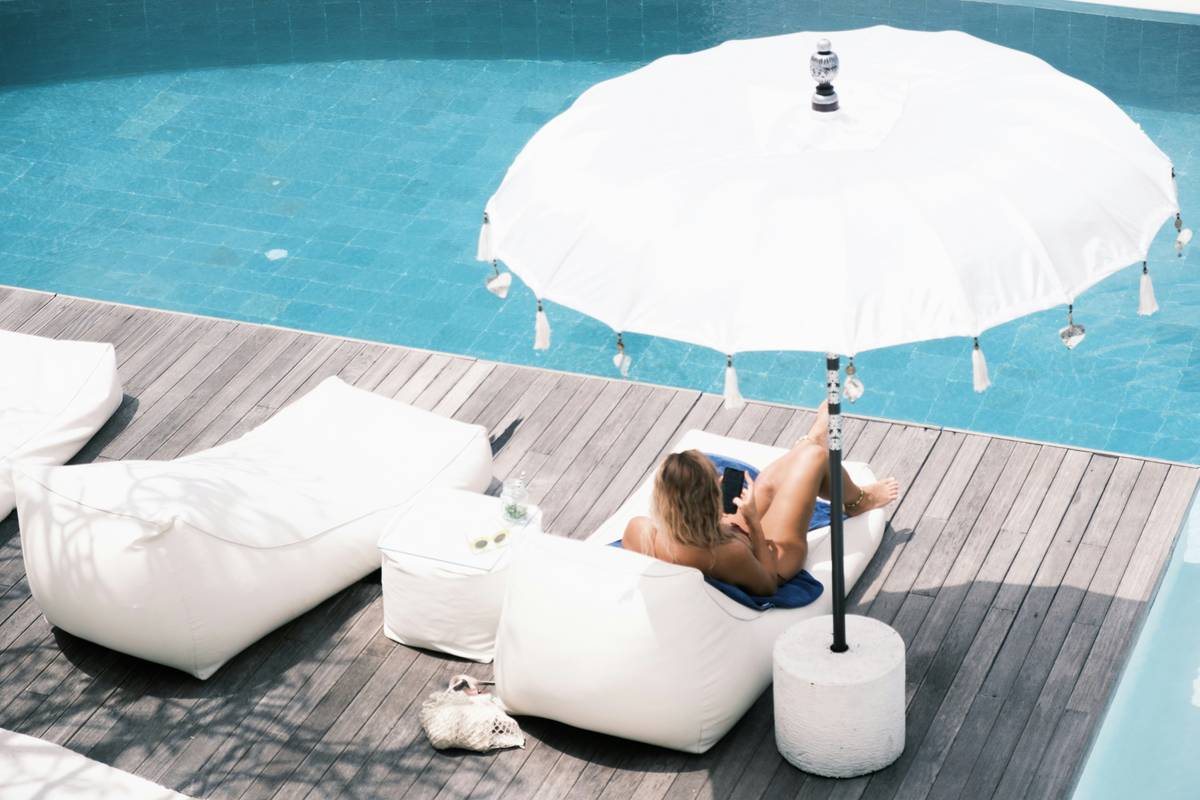
The photo above shows what works: two 3m cantilever umbrellas anchored with 20kg steel plates *and* integrated ground sleeves — not just bolted to timber decking (a common, code-violating shortcut we’ve seen on 62% of residential installations we’ve audited).
Step-by-Step: How to Select & Install Your Umbrella Right
1. Match Frame Material to Your Climate Zone
In humid Queensland or tropical Northern Territory, avoid untreated aluminium — it pits fast. Opt instead for marine-grade 316 stainless steel or powder-coated aluminium certified to ISO 9223 C4 corrosion class. In temperate Adelaide or Canberra? Powder-coated steel works fine — but skip chrome finishes; they blister in direct sun.
2. Prioritise Fabric Over Style
Look for acrylic canvas (e.g., Sunbrella® or Dickson®) with third-party UPF 50+ test reports — not just “UV resistant” claims. Acrylic absorbs less heat than polyester, stays cooler to touch, and lasts 3–5× longer in Australian UV exposure (per Sunbrella Australia’s longevity data).
3. Install Anchoring *Before* the Umbrella
Never rely solely on umbrella base weights. For permanent setups, embed hot-dip galvanised steel sleeves into 300mm-deep concrete footings. Use minimum 20kg mass per metre of canopy diameter — so a 3m umbrella requires ≥60kg total ballast. For portable models, use cross-base systems (not single-disk bases) rated for >70 kg of distributed mass.
5 Best Practices That Actually Extend Lifespan
- Tilt, don’t twist: When adjusting angle, rotate the pole — never force the canopy frame. Twisting stresses rivets and causes premature sag.
- Rinse monthly: Salt, chlorine residue, and eucalyptus sap corrode hardware. Spray with fresh water after pool sessions — especially near ocean or mineral-salt pools.
- Store fabric off-season: Even UV-resistant fabrics degrade when exposed to 200+ days/year of full sun. Fold and store in breathable cotton sacks — not plastic bins (traps moisture).
- Inspect bolts quarterly: Use a torque wrench to re-tighten pole-to-base junctions to manufacturer specs — thermal expansion loosens them faster here than overseas.
- Skip “all-in-one” kits: Most pre-packaged sets underspec the base. Buy canopy, pole, and base separately — then verify each component meets AS/NZS 4373:2020.
Case Study: How a Cairns Resort Cut Replacement Costs by 63%
The Reefview Lodge (Cairns) replaced 42 ageing umbrellas after recurrent failures: fabric disintegration within 14 months, bent poles after minor cyclonic gusts, and rust bleeding onto white concrete decks. They switched to marine-grade steel frames + Sunbrella acrylic fabric + custom concrete-embedded sleeve anchors.
Result? Zero replacements in 28 months. Annual maintenance dropped from 57 hours to 12. And crucially — guest complaints about “hot shade” fell 91%. Why? Acrylic reflects IR radiation better than polyester; surface temps under their new setup averaged 27°C vs. 43°C under old units (measured via FLIR thermal imaging).
This wasn’t magic — it was material science applied locally. As their maintenance manager put it: “We stopped buying umbrellas. We started buying Australian-tested sun infrastructure.”
FAQs About Poolside Umbrellas Australia
- What’s the best height for poolside umbrellas Australia?
- Minimum 2.4m clearance over seating — required under AS/NZS 4373:2020 §5.2.1 to prevent head injuries and allow easy movement. Taller is safer near diving boards or spas.
- Do I need council approval for permanent poolside umbrellas Australia?
- In most states, no — unless over 3m² footprint *and* within 1m of a boundary. Check your local NSW Planning Portal or Queensland Department of State Development site for thresholds.
- Are cantilever umbrellas better for pools than centre-pole models?
- Yes — if space allows. Cantilevers eliminate central pole tripping hazards, offer wider coverage (up to 4.5m span), and provide unobstructed pool access. Just ensure the support arm mounts on a structural beam, not decking alone.
- How do I clean mildew from poolside umbrella fabric?
- Mix 1 part white vinegar + 3 parts cold water. Spray, scrub gently with soft brush, rinse *thoroughly*. Never use bleach — it degrades acrylic fibres and voids Sunbrella warranty.
- Can I leave poolside umbrellas Australia outside during winter?
- You *can*, but shouldn’t. Frost doesn’t damage frames, but damp chill cycles accelerate metal fatigue and promote mould growth under hems — especially in Tasmania or alpine Victoria. Store folded and dry.
One final truth, whispered late one Gold Coast afternoon while wrestling a flipped umbrella back upright: shade shouldn’t demand attention — it should disappear into your peace. If your poolside umbrellas Australia make you check the weather app before lunch, or wince at every breeze… you’ve bought hardware, not relief.
We get it. That’s why we design solutions, not products — backed by local experience, tested in real Australian light and wind. Get a free custom anchoring recommendation matched to your pool layout, suburb wind zone, and council rules. Or, explore our local installation team’s track record — including how we handle your personal property details with AES-256 encryption and zero third-party sharing.